Product guide
How to add environment fit questions to a position in Truffle
By the end you'll have a position that tells candidates what the work is actually like — the pace, the interruptions, the pressure — and shows you which of them genuinely want that, so the people who would have quit in month two can decide not to start.
Copy as markdown
Before you start
- A Truffle account. The free trial works. 7 days, 30 credits, no card required.
- An honest view of what the job is like day to day. This assessment is only useful if you describe the conditions as they really are — flattering the role here just moves the disappointment to week three.
- 1
Write the role as it actually is
Truffle draws the questions from the role and its brief, so this step decides what you get. Describe the real rhythm of the job: whether the day is interrupt-driven or heads-down, how much of it is customer-facing, how predictable the schedule is. A brief that describes the job you wish you were offering produces questions about that job instead of this one.
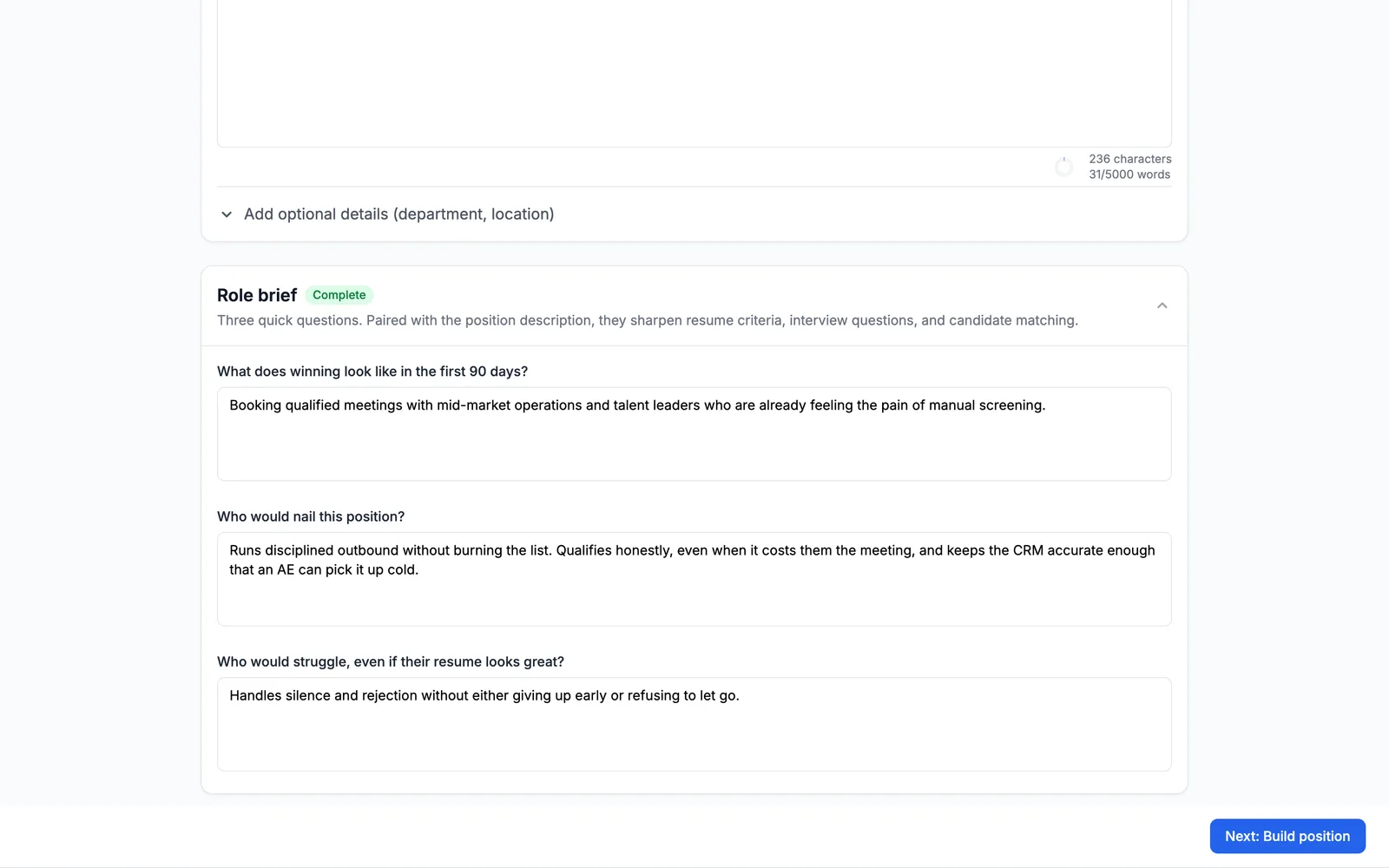
- 2
Open Assessments and pick Environment Fit
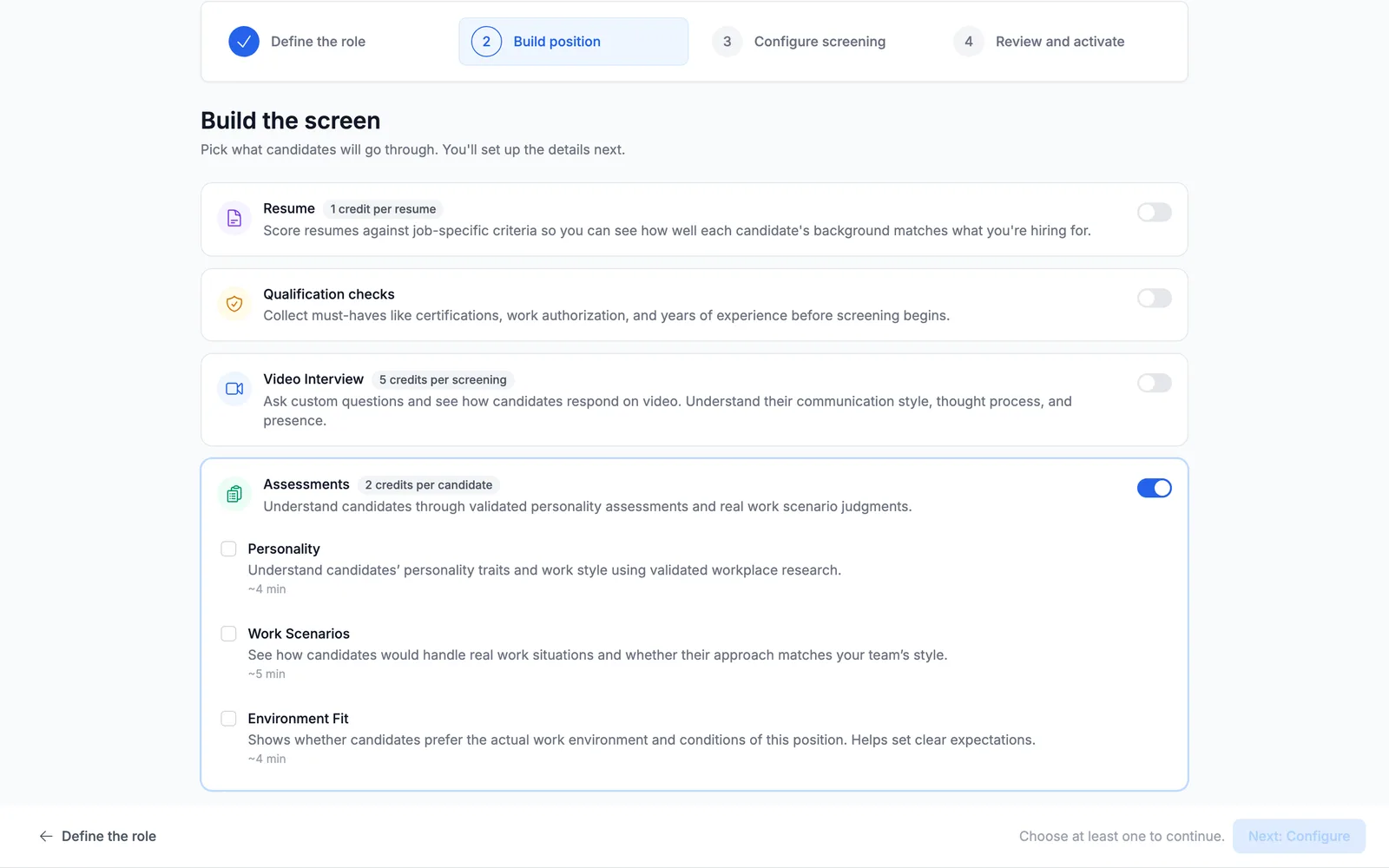
On Build position, switch on Assessments and tick Environment Fit (~4 min). Truffle describes it as showing "whether candidates prefer the actual work environment and conditions of this position. Helps set clear expectations." That is the whole idea — it is a preview of the job, answered from both sides.
- 3
It can run on its own
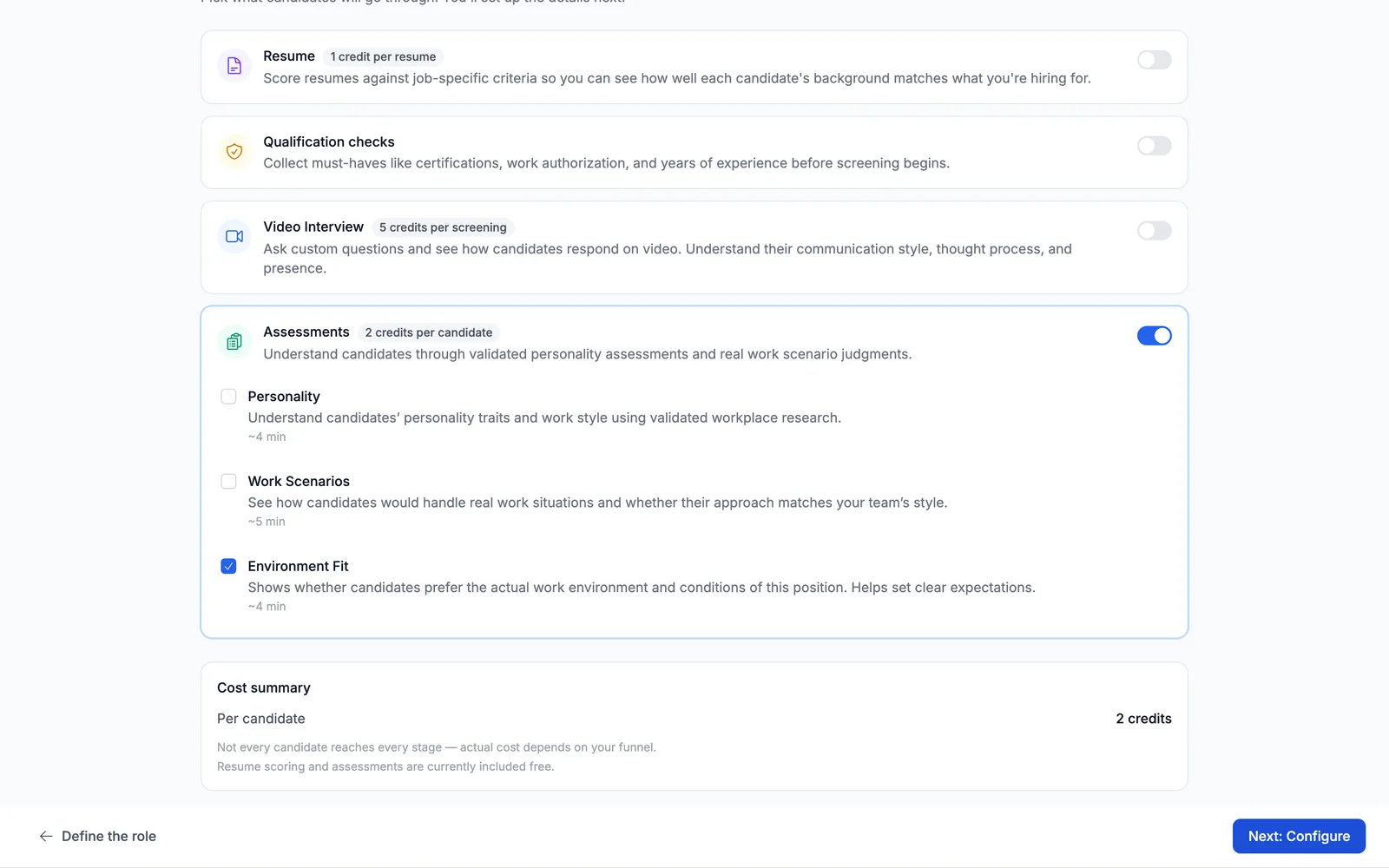
Next: Configure stays enabled with nothing else switched on, so a position can run environment fit by itself. In practice it pairs well with a one-way interview: the interview tells you how someone works, this tells you whether they'd want to keep doing it here.
- 4
Let Truffle draft the questions
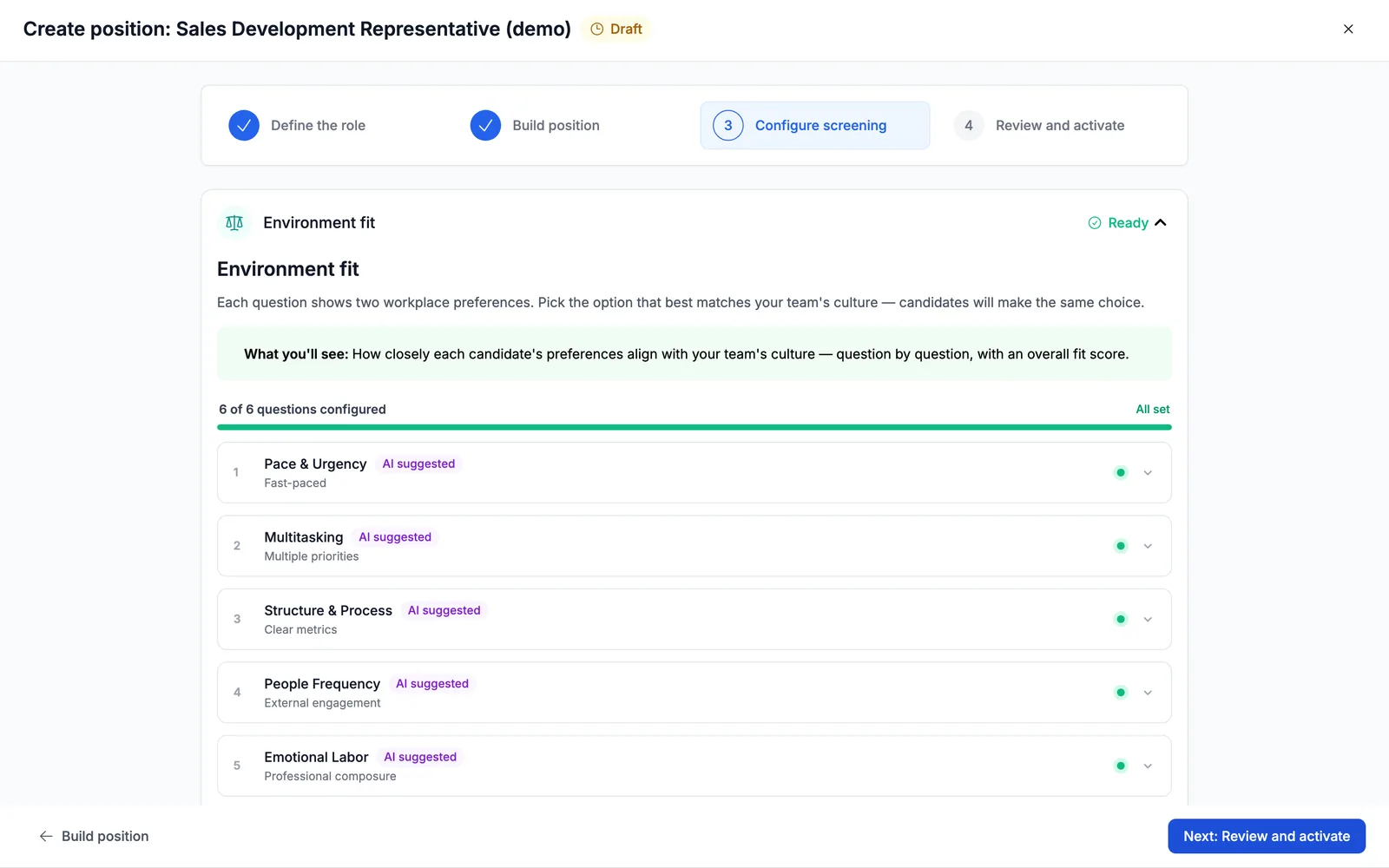
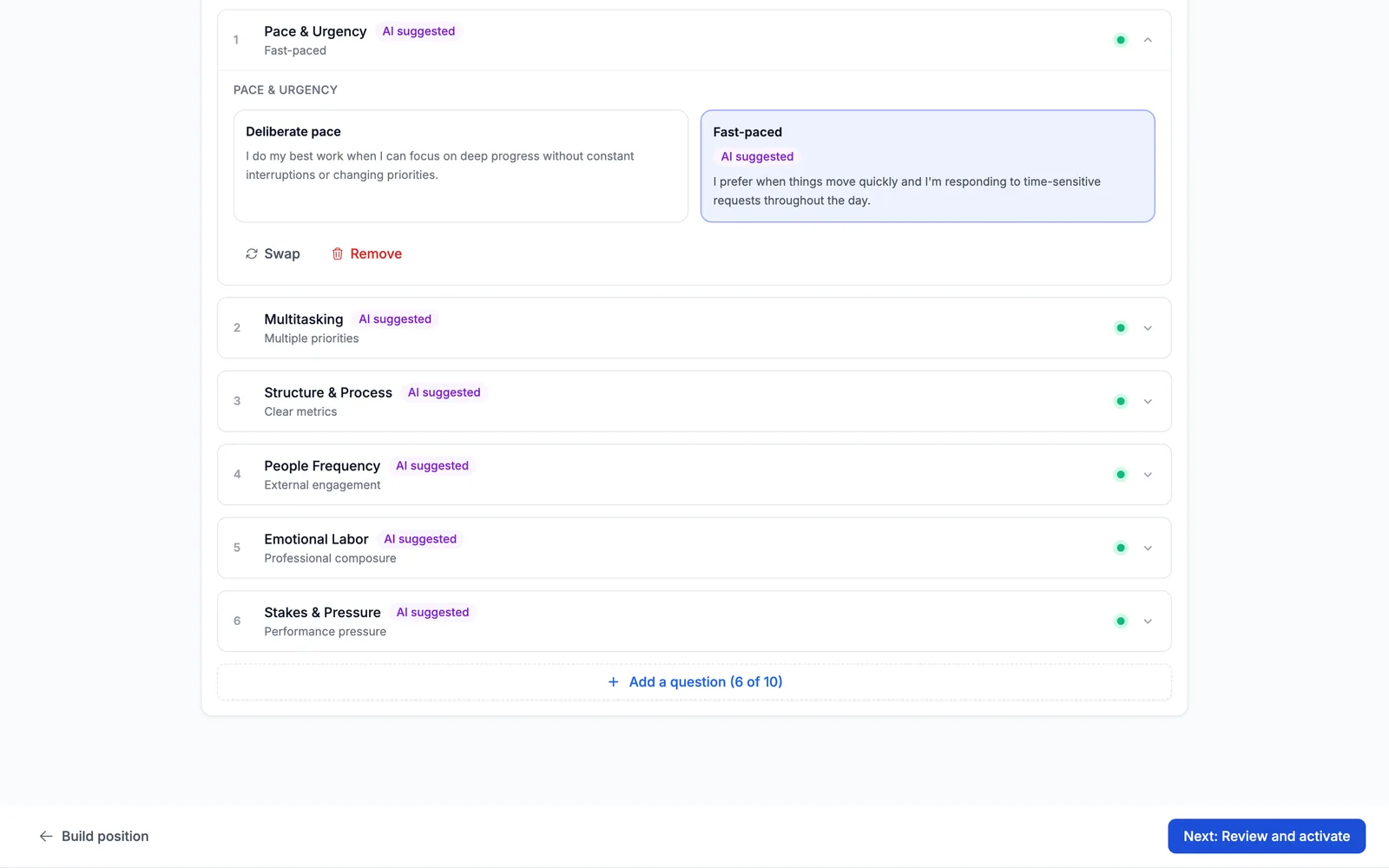
Move to Configure screening. Truffle reads the role — "Finding the best questions… AI is analyzing your position to suggest relevant environment fit questions" — and comes back in around ten seconds with a set matched to the job. For a sales development role that meant Pace & Urgency, Multitasking, Structure & Process, People Frequency, Emotional Labor and Stakes & Pressure.
- 5
Say which one this job actually is
Open a question and you get two ways of working, side by side. Under Pace & Urgency: Deliberate pace — "I do my best work when I can focus on deep progress without constant interruptions or changing priorities" — or Fast-paced — "I prefer when things move quickly and I'm responding to time-sensitive requests throughout the day." Neither is the better answer. One of them is just true of this job, and your only task is to say which.
- 6
Swap what doesn't describe the job, add what's missing
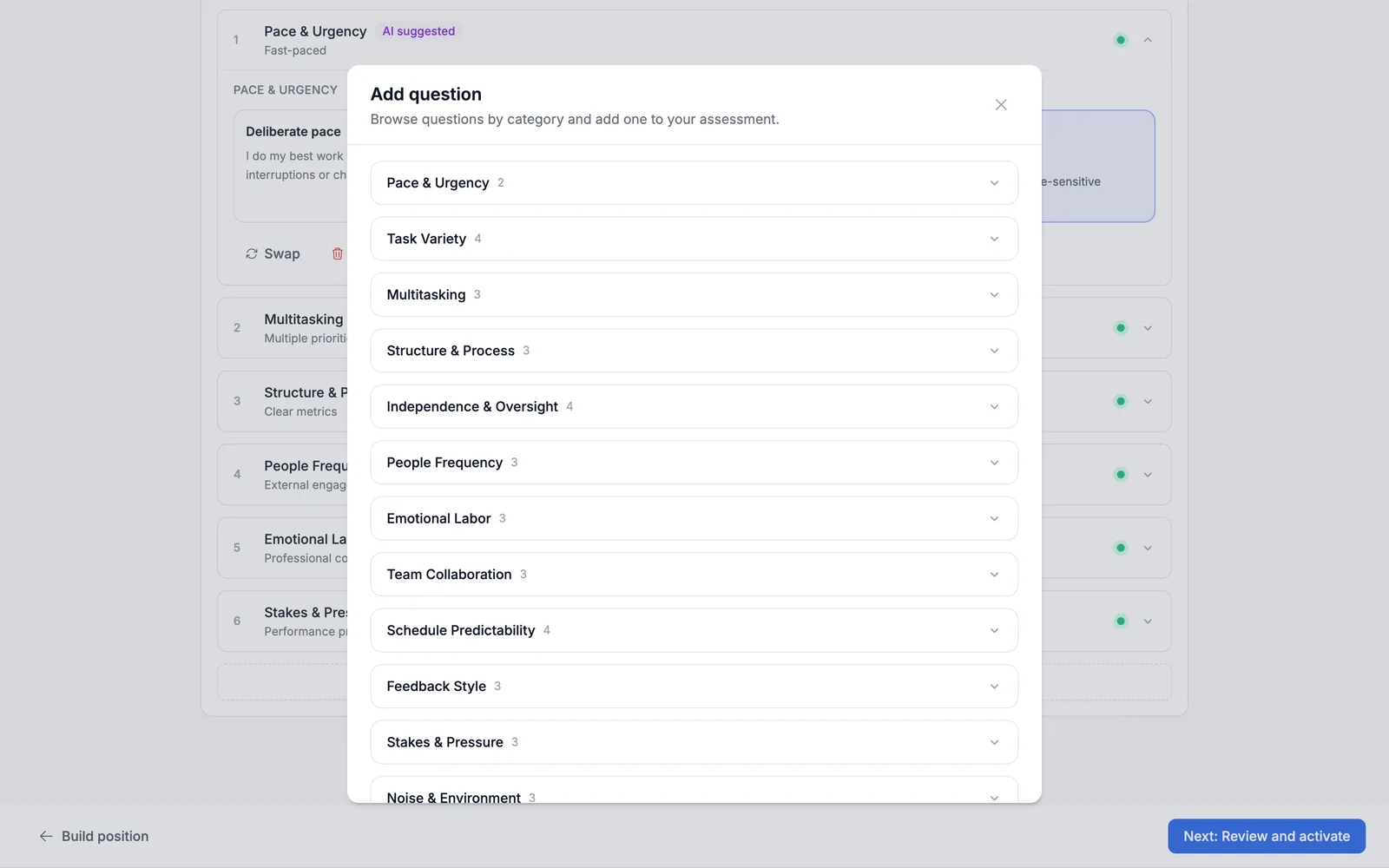
Each question has Swap and Remove, and Add a question opens the library — "Browse questions by category and add one to your assessment" — grouped by category: Task Variety, Multitasking, People Frequency, Emotional Labor, Team Collaboration, Schedule Predictability, Feedback Style, Learning Style, Decision Authority and more. If the thing people actually quit over isn't in the draft, add it.
- 7
Activate, and read the result as a conversation
Take the position live from Review and activate. Candidates answer the same questions, choosing the conditions they'd actually prefer, and the page tells you what comes back: "How closely each candidate's preferences align with your team's culture — question by question, with an overall fit score."
Questions
Is this a culture fit test?
No, and the difference matters. Screening for cultural similarity — hiring people who feel familiar — is how teams end up homogeneous, and it has a well-documented bias problem. Environment fit asks about working conditions instead: pace, interruptions, how much of the day is customer-facing, how predictable the schedule is. It's closer to a realistic job preview than a culture test, and the point is mutual expectation-setting rather than deciding who belongs.
What is a realistic job preview?
It's the practice of telling candidates what a job is genuinely like — including the parts they may not enjoy — before they accept it. The idea is that people who know what they're walking into either opt out early or arrive without illusions, which tends to mean fewer surprises and fewer very short stays. Environment fit is that idea turned into a set of questions both sides answer.
Should I reject candidates whose preferences don't match?
No. A mismatch tells you where expectations differ, which is a conversation worth having before someone starts rather than a reason to end it. Some people take a fast-paced job knowing exactly what it is. The value is that nobody is surprised in month two. Truffle doesn't auto-reject on a fit score and neither should you.
What if I answer the questions the way I wish the job were?
Then the assessment works against you. It matches candidates to the conditions you described, so describing an aspirational version of the role selects for people who want a job you're not actually offering. Answer it as the job is today, not as you hope it will be after you fix things.
How many questions does a position get?
Truffle suggests a set based on the role, and a position holds between five and ten. The draft isn't fixed — you can swap questions, remove them, or add from the library, which is grouped into categories like Schedule Predictability, Decision Authority and Feedback Style.
Can environment fit run without a video interview or resume screen?
Yes. It counts as a screening component on its own. Pairing it with a one-way interview is a common setup: the interview shows how someone works, environment fit shows whether the conditions here are ones they'd want.
Try it on your own role
Every plan includes resume screening, one-way interviews, and talent assessments.
Start free trial7 days · 30 credits · no card required