





You'll never believe this, but there was a time when the first person you talked to at a company was an actual person. You'd call the front desk, ask if they were hiring, and some receptionist named Olivia would say "let me transfer you." No login portal. No applicant tracking system. Just a human being picking up the phone.
Now there's a different Olivia — and she's available at 2 a.m., speaks 30+ languages, and will never accidentally transfer you to the wrong extension. Paradox AI built a conversational hiring assistant that screens, schedules, and answers candidate questions entirely over chat. But does it live up to the hype?
What is Paradox AI?
Paradox AI comes from Paradox Inc, headquartered in Scottsdale, Arizona. They've built conversational recruiting software designed to automate parts of the hiring process through text and chat interactions.
The core product is Olivia, an AI assistant that handles routine recruiting tasks. It texts candidates, schedules interviews, answers FAQs, and collects basic information. Paradox positions this as a way to handle high-volume hiring without hiring more recruiters.
The software is built for enterprise teams and franchise operations. If you're hiring 50+ people a quarter, Paradox wants to be in your stack. If you're a lean recruiting team handling a few high-priority roles, the setup and cost probably won't make sense.
Conversational ATS
Paradox built a conversational layer on top of traditional ATS workflows. Instead of candidates filling out web forms, they text answers to Olivia. The data still goes into an ATS, but the interaction is different.
This speeds up application submission, which matters for mobile candidates. But it also means your ATS is still the system of record. You're bolting Paradox on top of something else.
Interview scheduling automation
Olivia can ping candidates, propose interview times, and send calendar invites. This saves your recruiter from sending 50 scheduling emails.
The reality: interview scheduling automation exists in most ATS platforms now. It's table stakes, not a differentiator. What matters is whether the time you save actually translates to faster hiring or just freed-up Slack time.
One-way video interviewing
Paradox launched one-way video interviewing as a feature. Candidates record responses on their own time. Paradox transcribes and stores the video.
But here's the gap: transcription alone isn't enough. You still have to watch or skim every video to know who's real. Paradox doesn't surface 30-second highlights the way some competitors do. You're back to hours of video review.
Compare this to tools that actually analyze what candidates say and pull the most revealing moments. If you're evaluating video interview software, the quality of the AI analysis matters more than just having video.
Career sites and job distribution
Paradox handles career site creation and job distribution to job boards. You design your career site, Paradox pushes your openings to Indeed, LinkedIn, and other channels.
The jobs that use Olivia from Paradox run the full employment funnel on Paradox's platform. It's a complete recruitment flow, which is powerful if you're all-in. It's also a big migration if you're not.
Onboarding and offer management
Paradox handles onboarding workflows and offer paperwork through conversational channels. New hires get texted their offer, complete I9s, and confirm start dates. It's automation for the tail end of hiring.
Paradox AI pricing
Paradox doesn't publish pricing. Everything is custom. Your bill depends on company size, number of modules you use, integration depth, and contract length.
This is typical enterprise software math. The advantage: flexibility and the ability to negotiate. The disadvantage: you won't know what you're paying until you talk to sales, and you might find out you're overpaying compared to transparent alternatives.
If you need a quote, you have to call them. That's a sales process, not a product purchase. Some teams love that. Others find it frustrating.
Estimated cost:
- Starts around $1,500 to $2,500 per month
- Annual contracts often range from $30,000 to $100,000+
- Pricing is tiered based on number of hires, locations, features, and integrations
Paradox AI's candidate experience has mixed reviews
Paradox is efficient. But is it human?
On Reddit and elsewhere, feedback from job seekers is split. Some find the chatbot experience smooth and easy to navigate. Others describe it as repetitive or impersonal, with frustrations around being passed through an automated funnel only to find no real person behind it.
This highlights a core truth. Recruiting automation software works well only when your process is well structured. If job postings are outdated or your recruiting leaders are not aligned, Olivia will still move candidates forward. But the handoff might fall apart.
Pros and cons of Paradox AI
Pros of Paradox AI
- High-volume hiring at scale. If you're hiring 500+ people a year across multiple locations, Paradox's automation handles volume better than humans alone. Olivia texts, screens, schedules. That's real throughput.
- Franchise and multi-location support. Paradox was built for businesses with many hiring locations. You set up once, Olivia runs across all locations with local nuance. That's valuable if you're Chipotle or McDonald's.
- Full-funnel automation. From application to onboarding, Paradox touches the whole pipeline. If you want one system handling everything, that's appealing. Fewer integrations. One vendor relationship.
- Conversational interaction with candidates. Candidates prefer texting to web forms. Paradox makes that the default. Higher mobile-friendly completion rates matter when you're at volume.
- Existing ATS integration. Paradox works with Workday, SuccessFactors, and iCIMS. If you're already in one of those systems, Paradox bolts on top. You're not ripping and replacing.
Cons of Paradox AI
- Enterprise pricing. Custom pricing means you'll spend more than you expect. Comparison: a small team at Truffle pays $149/month. A small team at Paradox pays five figures. That's not just a difference in scale. That's a difference in who the product is for.
- Video review still requires human time. Paradox's one-way interviews produce transcripts and videos. But you still have to watch them. The tool doesn't surface highlights or tell you which moments matter. You're back to hours of video review instead of hours of phone screens. That's not faster.
- Heavy setup and implementation. Paradox requires integration work, training, and configuration. You're not running it in 10 minutes. You need a project manager and a few weeks of planning. Small teams don't have that bandwidth.
Who should use Paradox AI
Enterprise and global teams
If you're a 1,000+ person company hiring consistently across dozens of roles, Paradox's automation at scale makes sense. You're paying for the convenience of not having to build this yourself.
Franchise and multi-location businesses
Paradox was designed for this exact use case. Consistent hiring across many locations with local variation. If that's you, their solution is purpose-built.
High-volume hourly hiring
Retail chains, hospitality groups, logistics companies. If you're hiring 100+ hourly employees a month, conversational screening cuts through volume. Paradox handles that.
Who might want an alternative
If you're a lean recruiting team (1-3 people) handling 10-20 positions a year, Paradox is overkill. You're paying enterprise pricing for a boutique workflow. You need something lighter, cheaper, and faster to implement. Teams dealing with high-volume hiring at a smaller scale have different needs than global enterprises.
That's where alternatives shine. Tools built for teams that hire consistently but don't need full-funnel automation or global scale.
Paradox AI integrations
Paradox connects to major ATS platforms, HRIS systems, and job distribution channels.
Paradox solutions are designed to sit on top of what you already own and add conversational automation on top.
Alternatives to Paradox AI
Paradox is the enterprise play. But you have options, depending on your size and needs.
Truffle
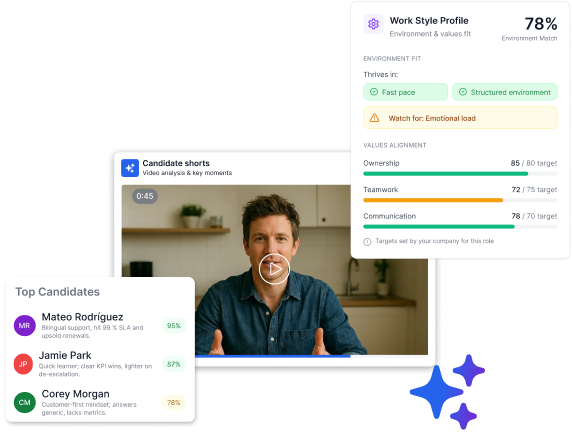
Truffle is a candidate screening software that combines one-way video interviews with resume screening and talent assessments. Unlike conversational screening that tries to auto-reject candidates, Truffle gives you multiple signals so you can make faster decisions yourself.
Here's how it works. Candidates apply, and you design the screening flow. That could be resume screening alone. Or resume plus a one-way interview. Or all three: resume, interview, and an assessment. You build it to match your role.
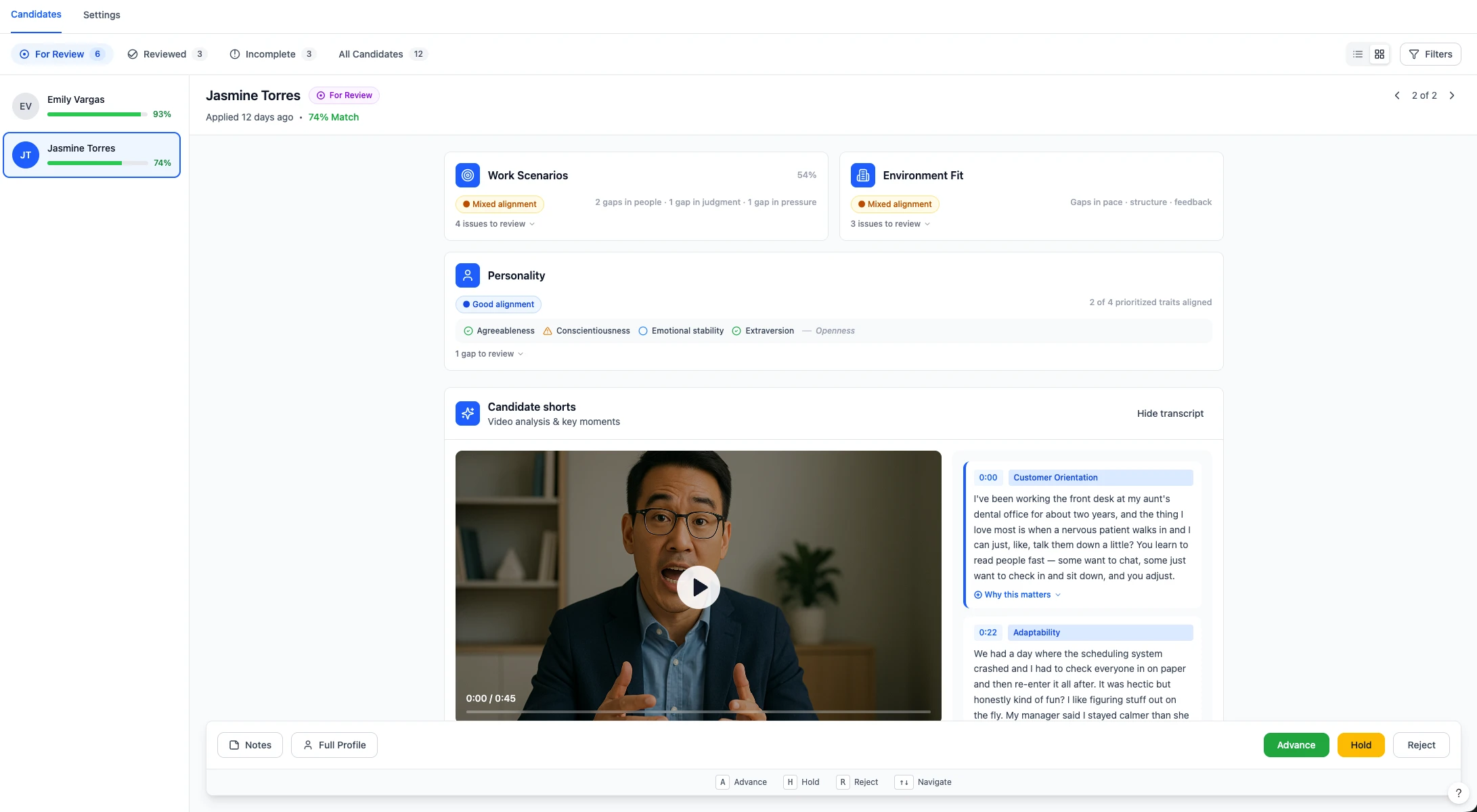
AI does the heavy lifting. It scores resumes against your criteria. It transcribes and analyzes interview responses, surfacing 30-second Candidate Shorts so you see the most revealing moments without watching 20 minutes of video. Assessments measure personality, situational judgment, or team fit.
The output is one candidate view with all the signals stacked together. Resume data. Interview highlights. Assessment results. Match scores. You see everything at once, decide who's real, and move the right people forward.
Pricing is transparent: $149/month or $99/month billed annually. No credit card needed for the 7-day trial. It's built for teams like yours.
The key difference from Paradox: Truffle doesn't try to auto-reject. It gives you the evidence to reject faster. You stay in control.
HireVue
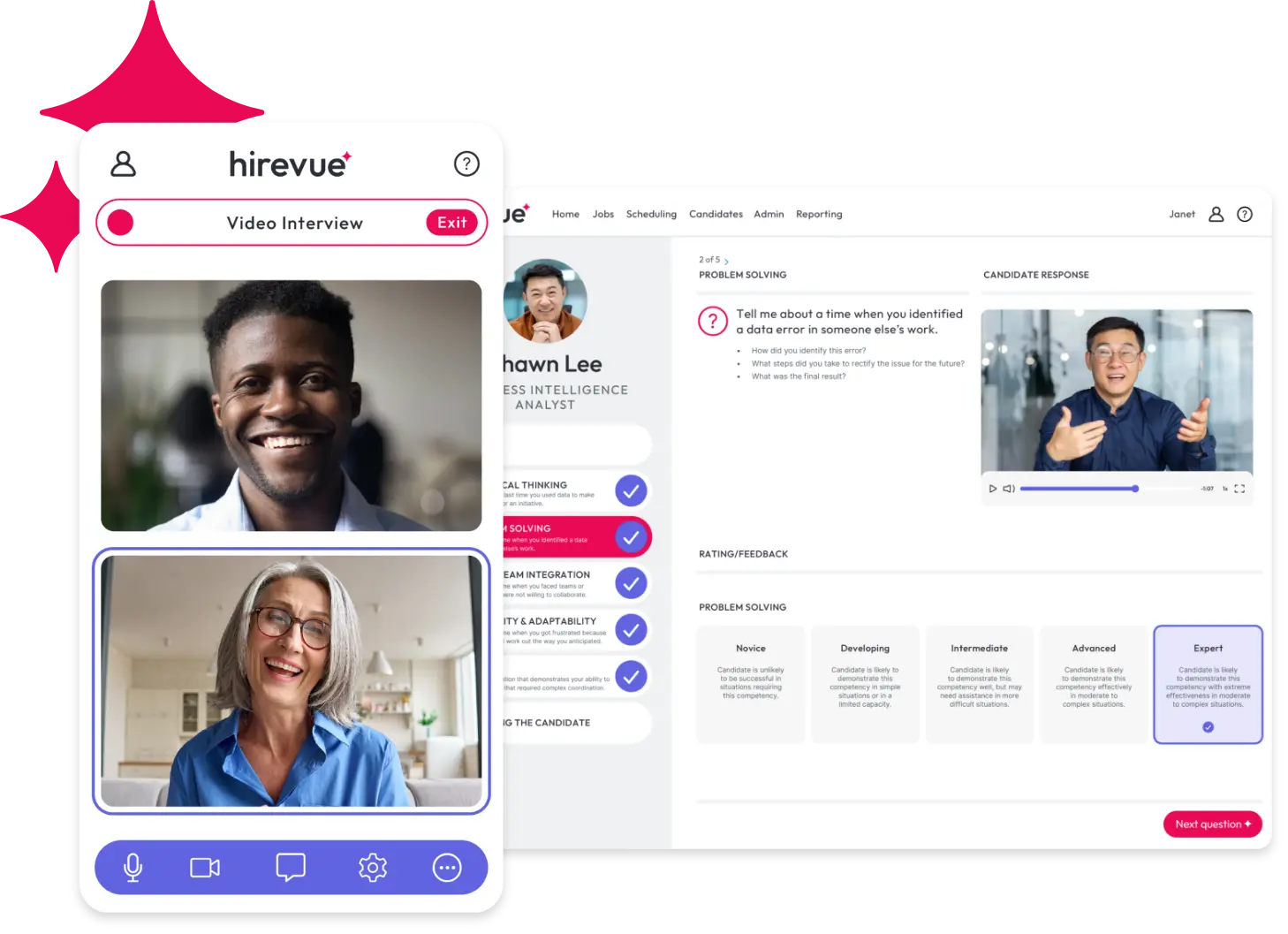
HireVue is one-way video interview software for large organizations. They've been in the space longer than anyone. Their strength is scale. If you're enterprise, they've probably thought through your specific problem.
But HireVue's pricing isn't public. You have to call their sales team. And they focus on volume hiring (retail, logistics, hospitality). For smaller teams, they're overengineered and expensive.
Spark Hire
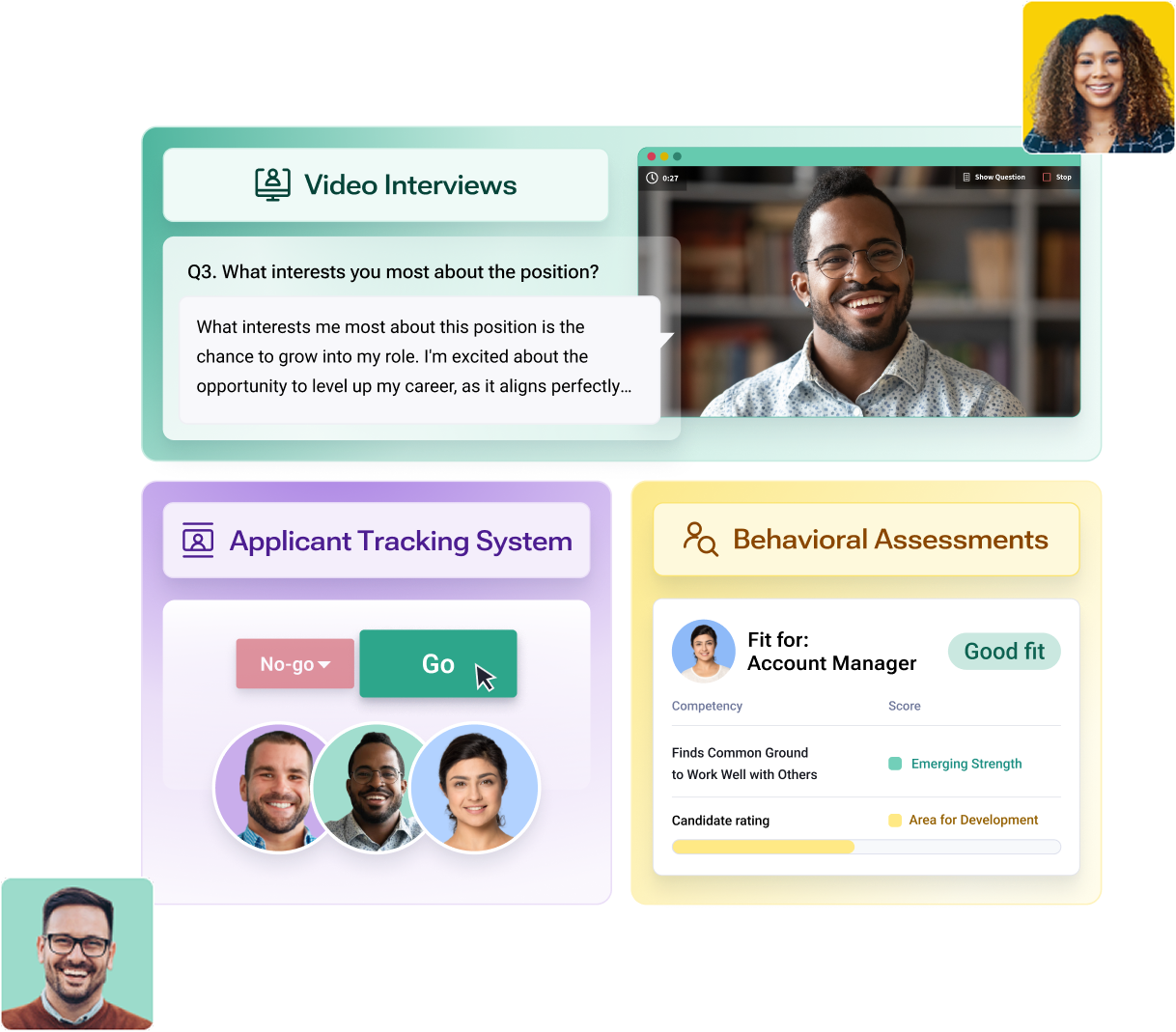
Spark Hire is another one-way video interview platform. Similar to HireVue but lighter weight. They run $299/month starting price.
Spark Hire works well as a pure video interview tool. If you just need candidates on video and you're okay with manual review, it does that job. But it's not a screening platform. You're bolting video onto your existing process.
Hireflix
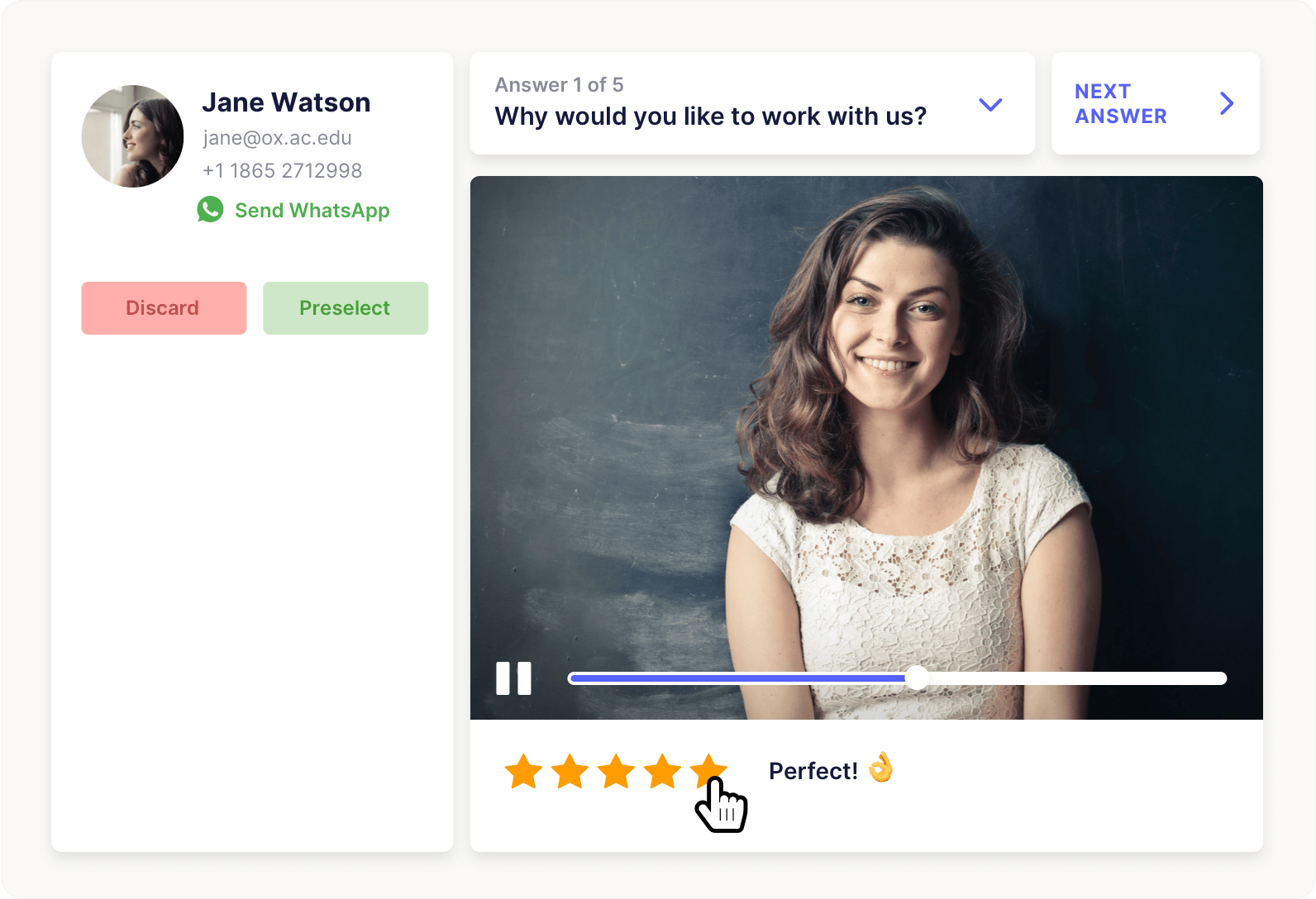
Hireflix is a newer one-way video platform. They emphasize ease of use and mobile-friendly interfaces. Pricing is $150+/month depending on features.
Hireflix is good for lightweight, async video interviews. But again, it's a single tool. You're not getting resume analysis or assessments or candidate ranking. You're just getting video.
VidCruiter
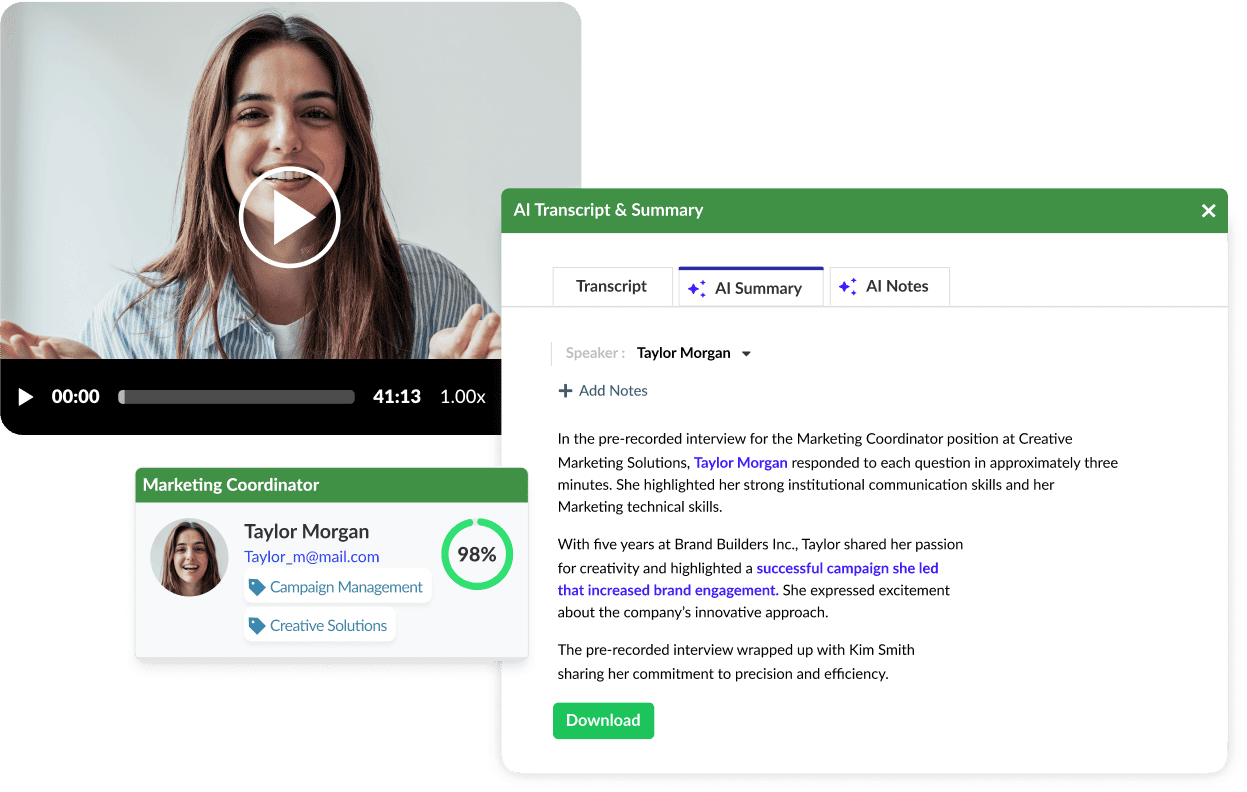
VidCruiter combines video interviews, assessments, and recruiting tools. It's broader than pure video platforms.
VidCruiter requires custom pricing (contact sales). For small teams, that usually means you'll pay more than you expect. And the product is complex. Implementation takes time.
How to choose between Paradox AI and alternatives
When you're evaluating Paradox against other options, ask yourself these questions.
- How many people are you hiring per quarter? If it's 50+, Paradox's enterprise automation might justify the cost. If it's under 20, you're overpaying for scale you don't need.
- Do you want the tool to decide or to help you decide? Paradox leans on Olivia to screen and reject candidates. Truffle gives you the signals to make the call yourself. One feels like delegation. The other feels like speed. Which appeals to you?
- How much setup time do you have? Paradox requires implementation. Truffle runs in 10 minutes. If your team is stretched, that matters.
- What's your current ATS? Both Paradox and Truffle integrate with major platforms. But Paradox is more like adding a layer on top. Truffle can replace parts of your workflow. Less integration work. Less vendor complexity.
- How important is transparent pricing? Paradox makes you call sales. Truffle publishes what you pay. If you want to know your cost upfront, that's a real factor.
- Does conversational screening make sense for your roles? Paradox's strength is high-volume, low-signal hiring where conversational bots work. If you're hiring for roles requiring nuance, judgment, or reading between the lines, conversational screening will miss candidates. You need signal-stacking instead.
The deeper question: are you hiring so much that you need to automate away human review? Or are you hiring fast enough that you need better signals to make decisions faster? Paradox answers the first question. Truffle answers the second.
FAQs about Paradox AI
Is Paradox AI trustworthy?
Paradox has been around since 2015. They're funded, growing, and trusted by Fortune 500 companies. Their AI is transparent about what it can and can't do.
But like any conversational AI, Olivia has limits. It makes mistakes. It misses context. It screens for boxes checked, not judgment calls. You shouldn't assume it's making perfect decisions. You should assume it's moving low-confidence candidates out of the pipeline. You review the rest.
What companies use Paradox AI?
Paradox serves enterprise companies and franchise operations. McDonald's, Chipotle, and other high-volume hiring organizations use them. That's public.
But the vast majority of hiring happens at smaller scales. If you're not doing franchise-level volume, you're not their target customer.
What jobs use Olivia from Paradox AI?
Olivia handles volume jobs. Retail, hospitality, logistics, food service. Roles where screening resumes alone doesn't surface much signal and high volume is the main constraint.
For specialized or high-skill roles, conversational screening isn't enough. You need signals about communication, presence, or judgment. That's where one-way interview questions and assessments matter more than chatbots.
Does Paradox AI work for small businesses?
Not really. Paradox is enterprise software. The pricing assumes high volume. The setup assumes dedicated resources. A 5-person business would overpay and under-use it.
Small businesses need tools that are cheaper, faster to implement, and don't require a sales negotiation. Truffle is built for that. So are lighter-weight one-way video platforms.
Where is Paradox Inc headquartered?
Paradox is based in Scottsdale, Arizona. That's where their main offices are. But like most software companies, they have distributed teams.