6 career page examples worth stealing from (sized for a small team)
Most 'best career page' roundups show you Airbnb and Netflix, companies with a design team and a thousand-person culture budget. Here's what actually transfers if you're running the careers page yourself, on top of your real job.


AI summary
- Most career page roundups pull examples from companies with hundreds of employees and a brand team. Six examples below (from a 900-person hospital to a 100-person content agency) show what to steal, but the translation for a business with 5 to 100 people is the actual point.
- The move that transfers regardless of size: state your mission in one sentence, show real photos instead of stock ones, list benefits in plain numbers, and say how long hiring takes. None of that needs a designer.
- The move that doesn't transfer: multi-region job filtering, podcast series, and 12-person People teams. Skip those and put the time into the parts a candidate actually reads.
Search “career page examples” and you get the same six or seven logos every time: LinkedIn, Airbnb, Salesforce, Netflix, Spotify. Beautifully art-directed pages built by companies with a dedicated employer branding team and a marketing budget bigger than most small businesses’ entire payroll.
If you’re the one updating your careers page between running payroll and covering a call-out, that list isn’t useful. You don’t have a video crew. You don’t have 40 open roles across 12 countries to filter by. You have maybe two or three postings open right now and an evening to make the page not look like it was abandoned in 2019.
So here are six real career pages, none of them Fortune 500, ranging from a 100-person content agency to a 900-person hospital system. None of them are exactly your size either. That’s the honest truth about “small business” career page roundups: the pages worth studying tend to belong to companies that grew enough to invest in one. What matters isn’t copying the page. It’s the one or two moves in each example you can actually pull off this week, on your own, for free.
1. Siege Media
Company size: around 110 people, remote-first content and SEO agency.
Key benefits listed on the page
- 100% medical, dental, and vision coverage
- Unlimited PTO
- 401(k) match, paid parental leave, mental health days
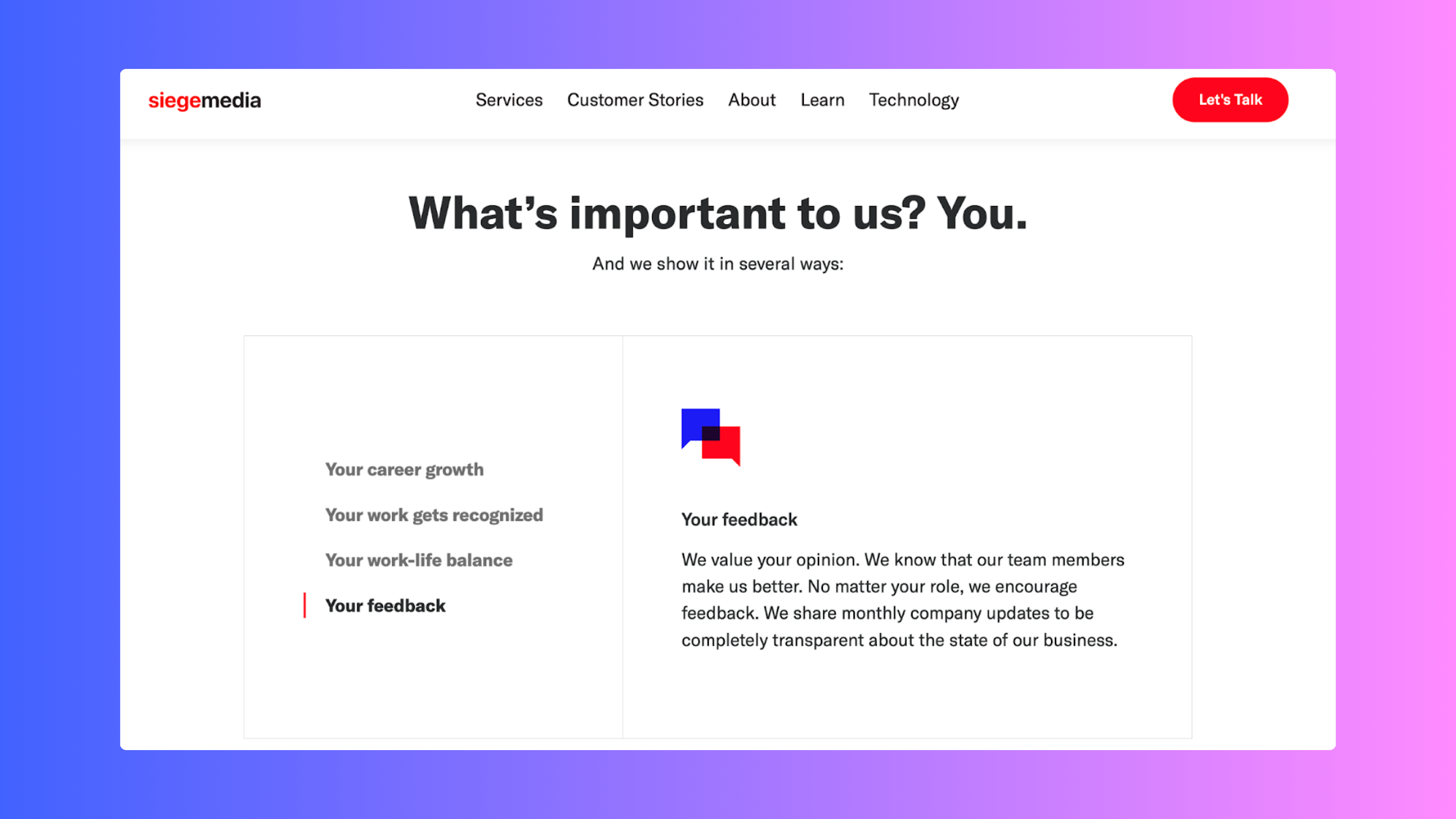
Siege Media’s careers page leads with a hexagonal grid of real team photos, no stock imagery, and a quote from founder and CEO Ross Hudgens: “We don’t hire people that just want a job. We hire individuals that want to do great work, grow their careers, and as a result, the business they work for.” Benefits are listed as a plain bullet list, not buried in a PDF.
What actually transfers to a small team: the photo grid and the one CEO quote. You don’t need 20 employee testimonials. One honest sentence from the owner, next to a real photo of the actual team (phone camera is fine), does more than a stock photo of people in a boardroom you’ve never met.
Check it out: https://www.siegemedia.com/careers
2. Craig Hospital
Company size: roughly 900 employees, a specialty rehabilitation hospital in the Denver area. Not a small business by any measure, but the page structure is worth studying because it’s built for people applying to a place, not a brand.
Key benefits listed on the page
- Multiple Top Workplace and Magnet certifications
- A “Total Rewards” package covering healthcare, retirement, and wellness
The page centers on Craig’s mission of helping patients regain independence after spinal cord and brain injuries, and it names the specific structure candidates will work inside: interdisciplinary care teams, not a generic “great culture” line.
What actually transfers to a small team: naming the actual structure a new hire steps into. If you run a five-person clinic, “you’ll work alongside two techs and report directly to me” tells a candidate more in one sentence than any values page. Specificity about the day-to-day beats a mission statement every time you’re too small to have a brand team writing the mission statement for you.
3. Taylor Guitars
Company size: roughly 450 to 750 employees across El Cajon, California and Amsterdam. 100% employee-owned through an ESOP since 2021.
Key perks
- Employee Stock Ownership Plan (ESOP)
- On-site chiropractor at the El Cajon facility
- Roles in El Cajon (CA) and Amsterdam (NL)
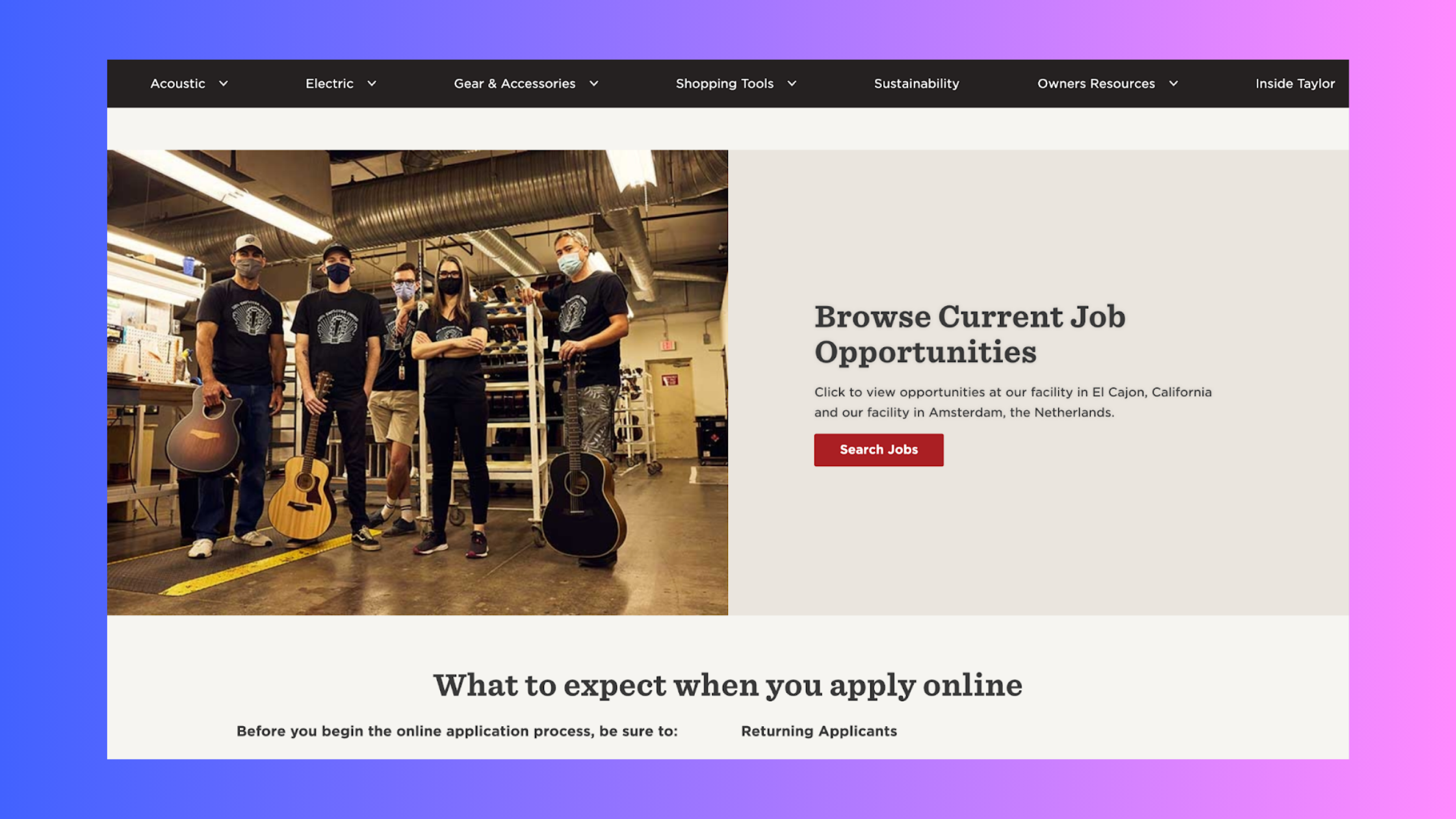
The top-level careers page is deliberately thin, just a one-line pitch and a link to open roles. The detail lives one click deeper, on the region-specific page, where four pillars (Craftsmanship, Innovation, Community, Service) and the full benefits list appear.
What actually transfers to a small team: the thin top-level page itself. You don’t need a full culture page if you only have two roles open. A one-sentence pitch and a clean list of what’s open, with the real details one click away, is a legitimate small business pattern, not a shortcut you’re taking because you ran out of time. For an even smaller data point: Panic, a 30-person software company, states its size in the first sentence and goes straight to what’s open, no scroll required. If a 30-person team can build the whole page in two sentences, your two- or three-role page doesn’t need to be any longer.
Check it out: https://www.taylorguitars.com/about/careers/us-amsterdam
4. Intellia Therapeutics
Company size: roughly 400 employees, publicly traded biotech (Nasdaq: NTLA).
Key highlights
- Mission: CRISPR-based, one-time treatments for genetic disease
- Four named values: One, Explore, Disrupt, Deliver
- “Imagine the Possibilities” podcast, 36 episodes, featuring employees across departments
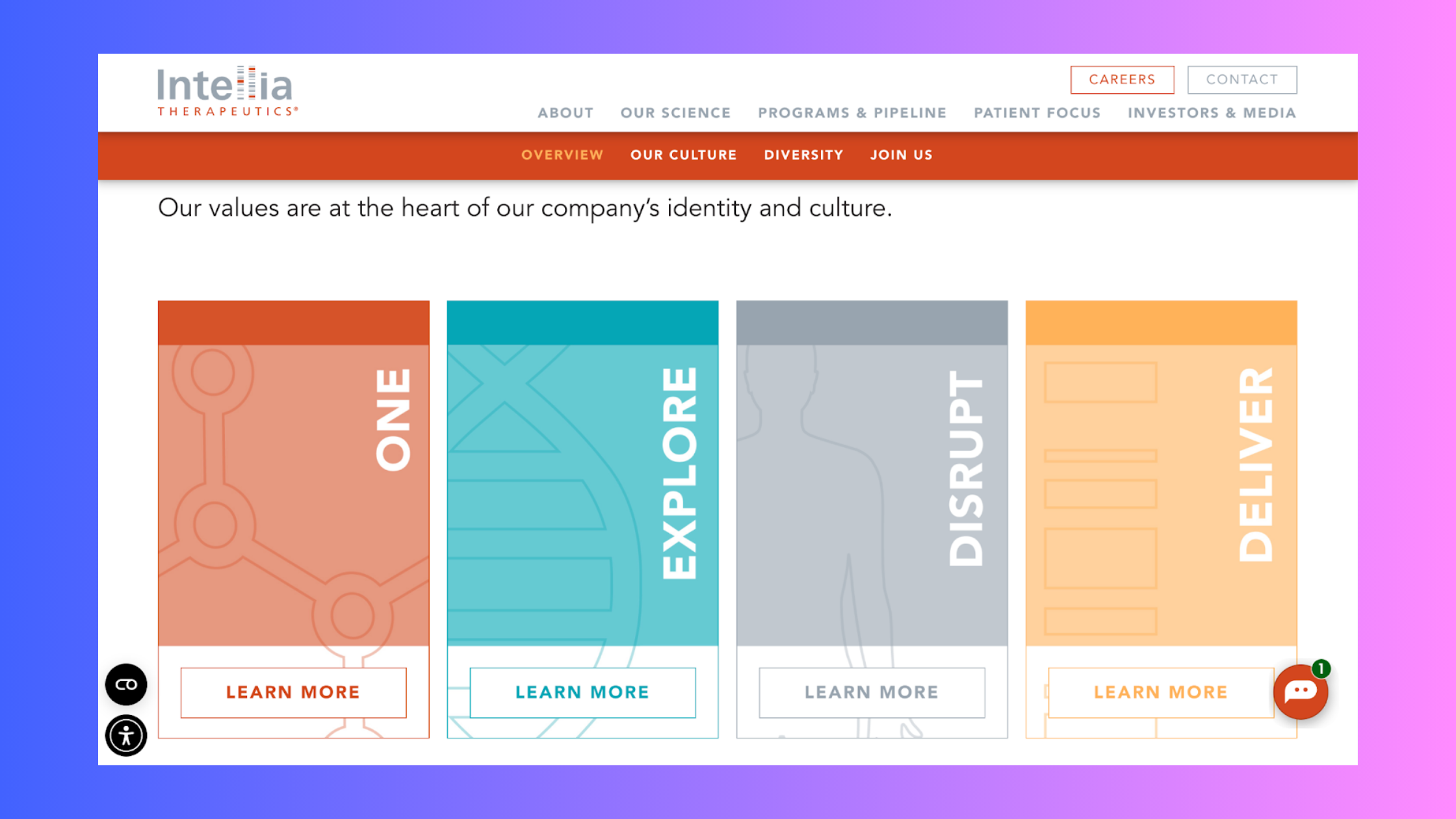
Intellia’s page is minimal on layout but specific on values, and it uses a long-running podcast to let candidates hear from actual scientists before they apply.
What actually transfers to a small team: you don’t need a podcast. You need the same instinct behind it, let a candidate hear from a real person before the interview. A two-minute video of your best technician talking about the job, filmed on a phone, does the same job as a podcast episode at a fraction of the effort.
Check it out: https://www.intelliatx.com/careers/
5. Earthjustice
Company size: around 600 employees, nonprofit environmental law organization.
Key benefits listed on the page
- 100% coverage of health, dental, vision, and alternative care premiums
- Six weeks of fully paid sabbatical after 10 years
- Fair chance hiring and a stated pay equity pledge for people of color
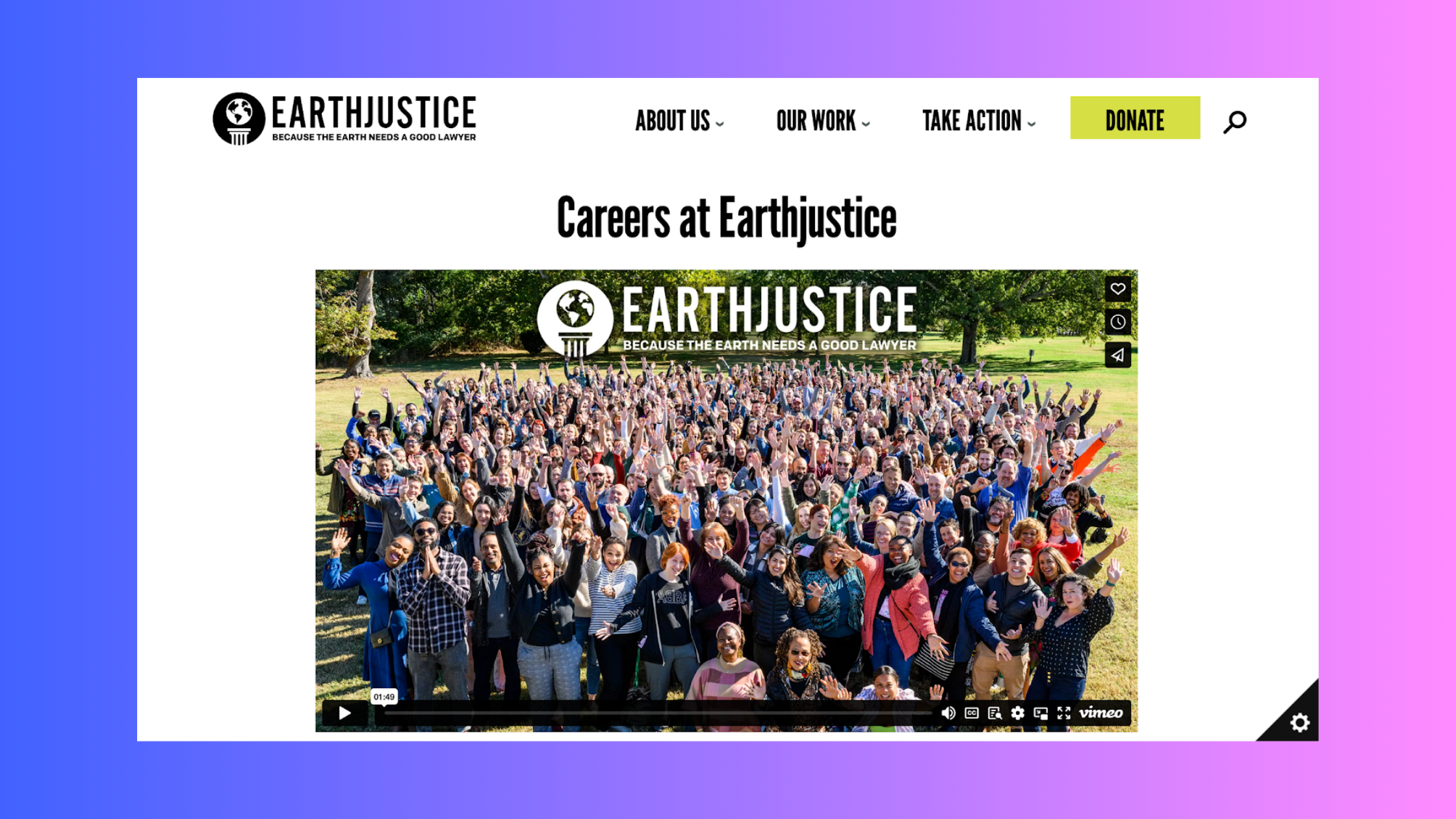
Earthjustice leads with “Because the Earth needs a good lawyer,” a mission line specific enough that it also screens people out. Someone who doesn’t care about environmental law self-selects away in the first five words.
What actually transfers to a small team: a mission line that filters, not just inspires. “We fix the plumbing nobody else wants to touch on a Sunday” tells a candidate more about the job than “we’re passionate about service.” Write the sentence that would make the wrong person for the role skip past your posting.
Check it out: https://earthjustice.org/about/jobs
6. Hirewell
Company size: roughly 100 to 130 employees, a recruiting and staffing firm, itself a small owner-run business hiring the same roles on repeat.
Key perks
- Remote-first with optional hybrid in select cities
- Four named values, including the plainly stated “no jerks allowed”
- Individualized advancement paths, not a fixed ladder
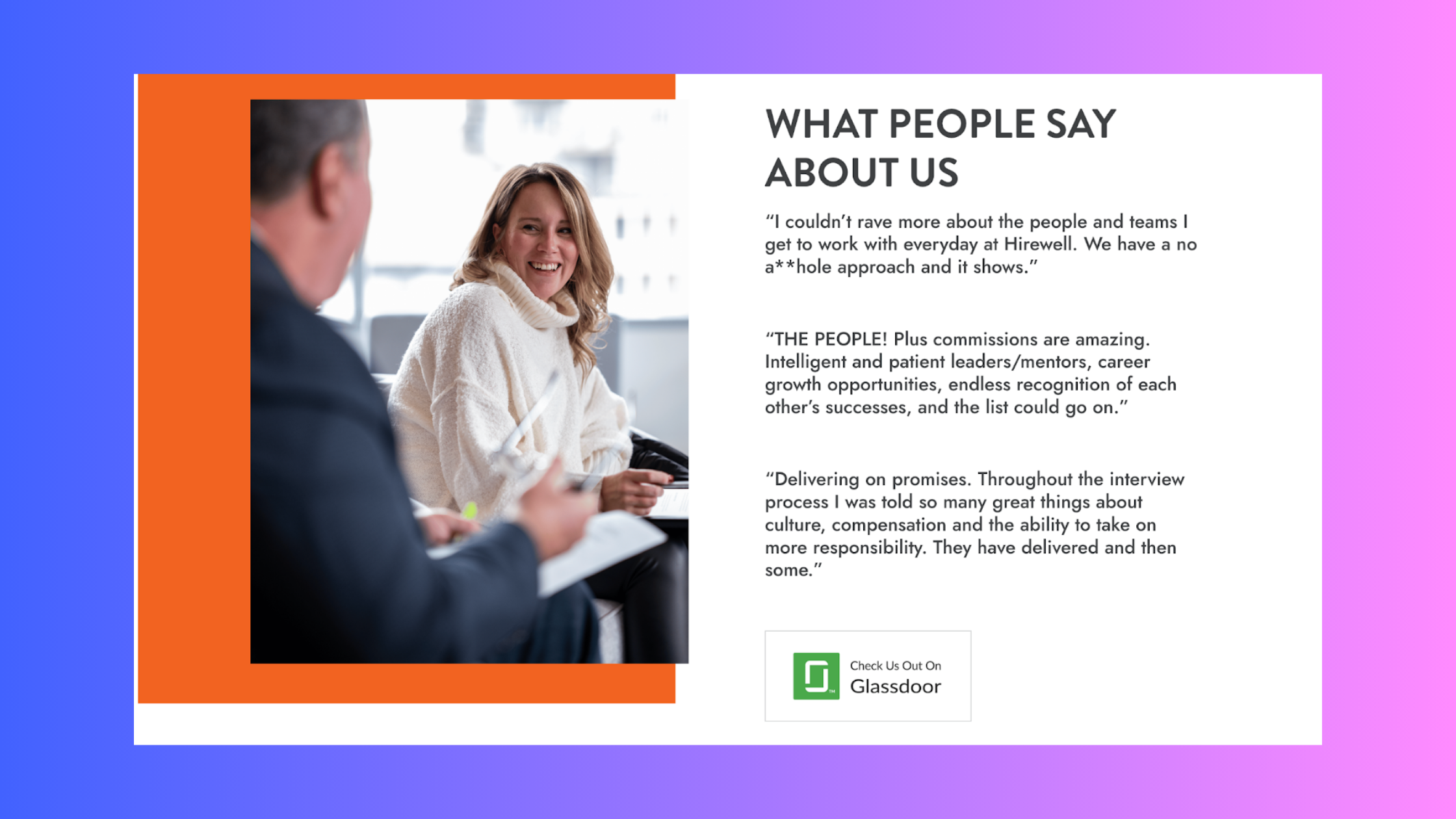
Hirewell’s motto, “Careers that Improve Lives,” sits at the top, and the values underneath are written the way a person actually talks, not the way a policy document talks.
What actually transfers to a small team: “no jerks allowed” is a genuinely useful example of writing a value in plain language instead of corporate language. If your real value is “we don’t do drama,” say that. Don’t translate it into “collaborative synergy” for the careers page.
Check it out: https://hirewell.com/careers
What to build if you’re doing this yourself
None of the six pages above were built by one person in an evening. Here’s the version that is.
Write one mission sentence, and let it filter. Not “we value excellence.” Something specific enough that the wrong candidate skips your posting: “we’re the crew that shows up for the 6am emergency calls.” Glassdoor’s Mission & Culture survey found that 77% of candidates weigh a company’s culture before applying, and a one-sentence mission is the cheapest version of culture you can put on a page. A candidate who reads it and applies anyway has already told you something.
Use real photos or skip photos entirely. SHRM reports that most job seekers, including hourly and blue-collar workers, are searching for jobs on their phones. A blurry photo of your actual team on a real phone screen reads as more credible on mobile than a polished stock photo, not less.
List benefits in plain numbers, not adjectives. “Health coverage” tells a candidate nothing. “We cover 100% of your health premium after 90 days” tells them everything. If a benefit is confusing to explain in one sentence, it’s probably too complicated to be a selling point.
Say how long hiring actually takes. “We’ll get back to you within a week” is a sentence, not a project. Candidates who apply through a company’s own careers page are hired at 4 times the rate of candidates from job boards, according to CareerPlug’s analysis of small business hiring data, and a chunk of that gap is candidates who simply don’t know what happens after they click apply and give up.
Keep the apply flow to one page. The instant a candidate hits a multi-page form asking for the same information twice, some of them close the tab. If you only have two roles open, you don’t need an applicant portal. A short form or even an email address gets the job done.
Add job posting markup so Google can list your roles for free. A few lines of structured data called JobPosting schema make each open role eligible to show up in Google’s own job search results, with your logo, next to listings pulled from Indeed and LinkedIn. Google’s own documentation confirms you don’t need an ATS to add it. Most website builders and CMS plugins can handle it without you touching code, and it’s free candidate reach a plain list of job titles doesn’t get you.
Skip what doesn’t apply to your size. Job filtering by department and location is a real feature on a page with 40 openings. On a page with 3 openings, it’s an empty dropdown that makes the page feel emptier than it needs to. Every feature you copy from a bigger company’s page should earn its spot for your actual number of openings, not because it looked good on Airbnb’s.
None of this requires a redesign. Most of it is an afternoon of writing plainly about what’s actually true, instead of reaching for the language a bigger company would use.
One more thing worth knowing before you rebuild the page: fixing the careers page usually increases the number of applications, not just the quality. If the pile is already the problem, a better page makes that worse before it makes it better. Resume screening is the part that keeps the bigger pile from becoming a bigger evening for you.
FAQs about small business career pages
Do you need a full career page if you only have one or two roles open?
No. A one-line pitch and a link to what’s open is enough, the way Taylor Guitars’ top-level page works before a candidate clicks into a region. A page that’s mostly white space around two postings looks more abandoned than no page at all, so match the page’s size to your actual number of openings, not to what a bigger company’s page looks like.
Should you put a salary range on the page?
Yes, if you can commit to one. A number a candidate can act on beats “competitive salary,” which tells them nothing and reads as something you’re hiding. If the range genuinely varies by experience, state the floor and the ceiling and let the interview settle where someone lands. Pay transparency is trending toward mandatory in more places every year, so treat a range as the default, not the exception, even where it isn’t required yet.
How long should a small business career page be?
Long enough to answer three questions: what the company does, what it’s actually like to work there, and what’s open right now. For most small teams, that’s a few hundred words and a handful of photos, not a full brand microsite. If a candidate has to scroll past a mission statement and a values grid to find the apply button, the page is too long for the number of roles behind it.
Does a better career page reduce the pile, or just grow it?
It grows the pile and improves it at the same time. A clearer page attracts more of the right candidates and talks the wrong ones out of applying before they waste your evening reading their resume. But it doesn’t do your screening for you. That’s a separate problem, and it’s the one the rest of this site is built to solve.
The careers page gets them in the door. Then what?
A good careers page does one job: it gets the right person to hit apply and talks the wrong person out of it before they waste your time. It doesn’t do the next job, which is figuring out who in that pile is actually worth a call.
That part still lands on you the next morning, when the applications are sitting in your inbox and you’re the only one reading them. Truffle is candidate screening software built for exactly that moment: you set the criteria, and it reads every resume, runs a one-way interview if you want one, and scores every candidate against what the role actually needs. You still make the call. You just aren’t making it at 9pm with 200 tabs open.
See Truffle’s pricing. Once a great careers page starts bringing the applications in, this is how you screen them fast enough to still be first to call the good ones.

.png)